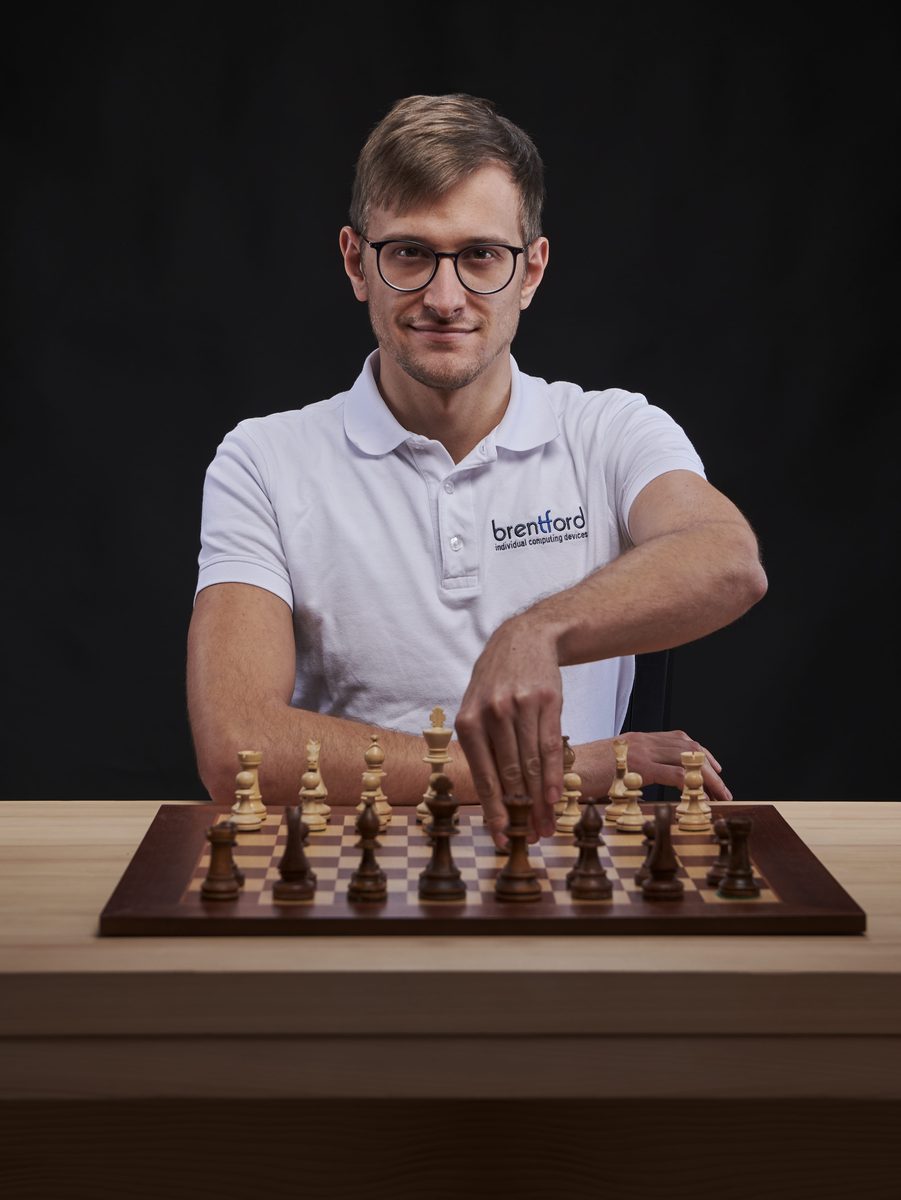
A course by GM Noël Studer · Swiss Champion 2019

Train less. Improve more.

A training system built for adult chess improvers who have way too little time and way too many things they feel they should study.

It shows you how to focus on what really matters, do it well, and stay consistent. How to navigate a world full of quick & easy promises and an overwhelming number of courses, books, and videos. How to get the most out of every hour you spend on chess.

Enroll for $397 6 monthly payments of $69

$397 or 6 × $69 · 1,300+ students · 14-day money-back guarantee

Grandmaster Noël Studer

You don't need more information. You need better training.

You spend a lot of time on chess. But then you sit down to play. You feel stressed. Your opponent doesn't play the lines you studied. And then you make mistakes you would never make in training.

The problem is that you're amassing knowledge but lacking skills. You don't struggle because you don't know enough. You struggle because your training doesn't build the skills you need in a real game. Finding tactics under pressure. Making decisions when you can't calculate everything. Staying focused for an entire game. These require a different kind of training than what most courses offer.

But instead of fixing that, you're stuck in a different trap. There are hundreds of courses, thousands of videos, and conflicting advice everywhere. You have limited time, maybe an hour a day, and it feels like there are a hundred things you should be working on. So you spend more time trying to figure out what to train than actually training. You buy courses you never finish. You jump between methods. You feel busy, but nothing changes.

What you need is not more material. It's less. A clear plan. Focused on the 5% that actually drives real improvement.
★★★★★
"He is like the proverbial person who is not just handing me fish, but teaching me how to fish on my own, so I can eventually feed myself, and grow stronger."
Dan Beuscher, SCIS student

Why I built this

At 22, I suffered a brain injury. I couldn't train for hours anymore. So I had to figure out the few things that actually move the needle in chess, and cut everything else. I trained less and improved more.

When I started coaching adult improvers, I realized they need the exact same thing. Same constraint, same system, different resources. That's why this course exists.

How it works

1
Week 1

Part 1: The Transformation

In one week, you'll experience what proper training feels like. By doing tactics properly, playing with focus, and analyzing with a simple framework, you'll lay the foundation for real chess improvement. Already on Day 2, you'll feel the difference of doing tactics the right way. And you might catch yourself thinking: "Can it really be that simple?"

2
Your plan

Part 2: The Personalization

This is where you create your personal plan with the help of the course. You'll cut nearly everything and only focus on 1–2 high-quality resources. Perfect for your level. At first, this can feel like a loss. So many things stripped away. But then the weight falls off your shoulders. You finally have a clear, manageable plan. You know what to focus on, and it's clear what you'll do any day of the week.

3
Your chess improvement library

Part 3: Steady Improvements

Armed with your personal plan from Part 2, you'll slowly learn more about chess training while already working on your game. See this as your personal library for building skills. Time trouble addict? There's a module. Struggle with focus? There's a module. Stuck on a plateau? There's a module. You'll return here for the next months and years.

★★★★★
"I've been doing Noël's course for a week now. Every morning for the past seven days, I've sat down and done an hour of work on my chess and I can't remember having ever felt this relaxed and at ease about my training, just because I know exactly what to do and how to do it. The more structure, the less discipline is needed."
Paul Knittel, tournament player
★★★★★
"Two months ago I started this course. Result: I started OTB games with a score of 4.5/5. My games are more solid, I recognize more patterns, I am adapting quicker to a new position, and most of all, I am more confident during the game."
Tom Bus, club player

Curriculum

Welcome To The Course - Here Is How To Get The Most Out Of It 2 lessons
  • Ready for real chess improvement?
  • Access This Course Via an App
Part 1: The Transformation 21 lessons
  • Day 1 - Are You Ready To Transform Your Chess?
  • Day 1 - The 3 Dos Of the Simplified Chess Improvement System
  • Day 1 - The 3 Don'ts Of the Simplfied Chess Improvement System
  • Day 1 - How To Break Through Plateaus - And Enjoy Them!
  • Day 1 - The Most Important Mindset Shift For Your Chess Success
  • Day 1 - What Really Matters for Chess Improvement (One Third Rule)
  • Day 1 - Your First Chess Training Week With a Simple Plan
  • Day 2 - Your Tactics Test
  • Day 2 - Solve Puzzles the Right Way
  • Day 2 - Possible Problems When Solving Tactics
  • Day 3 - Full Tactics Session - Mistakes Are Part of the Journey
  • Day 4 - How To Fully Focus While Playing Games
  • Day 4 - Make Focusing Easy to Play at Your Best
  • Day 4 - The Power of Planning Your Games
  • Day 5 - The 3 Questions to Analyze Your Games
  • Day 5 - Analyzing Your Game - Example 1
  • Day 5 - Analyzing Your Game - Example 2
  • Day 5 - Analyzing Your Game - Example 3
  • Day 6 - Tactics, Playing & Analyzing Combined
  • Day 7 - One Week of Simplified Chess Training
  • Day 7 - The Road Ahead - See You in Part 2!
Part 2: Create Your Personalized Training Plan 18 lessons
  • Create Your Personal Chess Training Plan!
  • The Magic of a Simple but Good Plan
  • How Much Time Should You Spend on Chess Training?
  • Train When You Are at Your Best
  • The Areas You'll Work On
  • How To Use This Course Alongside Your Chess Training
  • Your Rating Conversion
  • Rating Conversion Explanations to Download
  • The Three Possible Resource Systems - Pick Yours!
  • Video Courses - ChessMood
  • A Simple Book Series - The Step Method
  • Do It Yourself - Picking High Quality Resources
  • Bring It All Together
  • Three Example Training Plans
  • How To Improve Your Training Every Day
  • Could You Do Me A Short Favor?
  • It Is Time For Consistent Improvements With Your Plan! - Part 3 Preview
  • PDF Chess Training Planner
Part 2 Extra: The Weekly Training Plan Review 4 lessons
  • Your Weekly Review (And Plan For Next Week)
  • Weekly Review PDF
  • Monthly Review
  • Monthly Review PDF
Part 3: Steady Improvements - How To Get The Most From The Modules 1 lesson
  • Your Buffet of Chess Improvement
Module 1: Better Focus; Better Chess 5 lessons
  • How I Won 224 Rating Points with Good Focus
  • Create Your Chess Zone
  • How to Focus like a Champion
  • Taking Breaks To Increase Focus
  • Focus Training That Improves Your Chess
Module 2: Avoid These Chess Improvement Killers 6 lessons
  • The 4 Chess Improvement Destroyers
  • Stop Tilting for Good
  • The Only Way to Say Goodbye to FOMO
  • Stop Switching Openings like Underwear
  • How Our Ego Prevents Improvement
  • We All Make Mistakes - Be Kind with Yourself and Keep Improving
Module 3: Healthy Habits for a Stronger Mind and Body 5 lessons
  • Three Core Habits to Improve Your Brain Power
  • Sleep Better, Perform Better
  • Eat like an Athlete
  • Exercise like a Champion
  • You Don't Have to Love It, Just Do It
Module 4: Master Tactical Vision - Spot Tactics Consistently in Your Games 12 lessons
  • Tactic Fundamentals Reviewed
  • The 5 Steps To Tactics Mastery
  • Step 1 (+2) How To Learn A Tactical Motif
  • Step 3: Mix of Tactical Positions
  • Step 4: Best Move Positions
  • How To Train Tactics Overview
  • How To Train Tactics For 0-1500 (Chesscom Rapid)
  • How To Train Tactics For 1500-1800 (Chesscom Rapid)
  • How To Train Tactics For 1800-2000 (Chesscom Rapid)
  • How To Train Tactics For 2000+ (Chesscom Rapid)
  • 5 Steps To Tactics Mastery - Summary
  • Tactics FAQ:
Module 5: Play And Analyze With Purpose - Learn From Your Games 5 lessons
  • Learn More From Your Games
  • The Mistake List
  • A Curiosity Study
  • Processed Based Goals For Games
  • The Mindset Shift For Game Playing
Module 6: The Super Simple Way To Get a Good Enough Opening Repertoire 11 lessons
  • The Goal of Opening Preparation in Chess
  • Understand, Don't Memorize
  • What is a Suitable Opening?
  • Practical Advice on Your Opening Repertoire
  • When It is Time To Change Openings
  • Recommended Opening Resources
  • How to Create a Good Enough Opening Repertoire on Your Own
  • How to Study an Opening Course
  • How to Save Your Opening Knowledge (for Free on Lichess)
  • How to Improve Your Opening Repertoire Step by Step
  • Bonus Idea: Studying Openings in a Group
Module 6 Extra: Opening Principles Explained (Especially for players below 1200 chesscom) 5 lessons
  • Bonus Opening Principles
  • The 3 Opening Principles
  • Ideal Piece Set-up In Opening
  • Bring The King Into Safety!
  • Beginner Opening Mistakes
Module 7: Endgames Made Simple 6 lessons
  • Solve Your Endgame Worries in a Few Hours
  • The Difference of Endgame Principles and Theory
  • Surprisingly Simple Way to Study Endgame Theory
  • How to Study Endgame Theory with a Course
  • How to Get an Endgame Compass
  • Endgame Study: Where to Start?
Module 8: Study Strategy The Right Way 7 lessons
  • Welcome to Strategy!
  • Goal of Chess Strategy
  • What to Avoid in Chess Strategy
  • Strategy the Right Way
  • Pick Your Strategy Resource
  • Understand the Why
  • Think First, Learn Later
Module 8 Extra: Four Strategy Ideas Explained 4 lessons
  • Bonus 1: Improve Your Worst Placed Piece
  • Bonus 2: Which Side Is My Opponent Weak on?
  • Bonus 3: Test Yourself (Which Side to Play on?)
  • Bonus 4: When to Trade
Module 9: Balancing Fun & What Really Improves Your Game 5 lessons
  • Having More Fun But Still Improving
  • Fun Things - But They Destroy Your Progress
  • Playing Better Is Funnier!
  • How To Make Hard Things More Fun
  • Fun Chess Activities - Find Your Balance
Module 10: Break Through Plateaus - How to Stay Consistent 4 lessons
  • Plateaus Are Normal
  • Vicious Cycle of Plateaus
  • The Different Ways out of the Plateau
  • The Right Way to Get out of a Plateau
Part 3.1: Becoming a Practical Chess Player 1 lesson
  • All Modules Below Are Focused on In-Game Things
Module 11: How To Play Simple Chess 4 lessons
  • The Goal of Simple Chess
  • The Problem of Wanting Too Much (Overwhelming - Chess)
  • How To Play Simple Chess
  • Practical Application - Good Enough Moves
Module 12: The Simplified Thought Process 9 lessons
  • The Goal of The Simplified Thought Process
  • Introducing TIPS
  • How To Apply A New Thought Process
  • TIPS Depending On Your Level & Time Control
  • (T) Threats - How To identify Opponent's Threats
  • (I) Ideas - Find Tactical Ideas For Yourself
  • (P) Plans - Finding Good Enough Moves
  • (S) Safety - Blunder Check
  • Final Note - Simple, Not Easy - Have Fun And Good Luck!
Module 13: Time Management 15 lessons
  • Few Things Before We Get Into Time Management
  • $50,000 problems vs $5 problems
  • Time Trouble Defined
  • Is Time Trouble A Real Problem For You?
  • How To Solve Long Standing Time Trouble Issues
  • The Three A's of Time Trouble - Awareness, Acceptance, Action
  • Raising Awareness For Time Trouble Issues
  • Acceptance - This Is Not Going To Be Easy
  • Action #1: How To Adjust Your Tactic Training
  • Action #2: How To Adjust Your Last Third
  • Action #3: Key Habit for OTB Games
  • Action #4: One Key Question
  • Action #5: The 15 Minute Rule
  • Action #6: How To Analyze Your Games With Time Trouble
  • How to play against an opponent in Time Trouble
Module 14: Practical Decision Making 10 lessons
  • The 3 Goals of This Decision Making Module
  • The Questions That Guide Our Decisions (And make them absurd sometimes...)
  • Emotional Decision Making Example 1: How can I avoid a mistake?
  • Emotional Decision Making Example 2: How can I avoid a draw?
  • Emotional Decision Making Example 3: What if...?
  • Emotional Decision Making Example 4: How can I justify my last move?
  • Emotional Decision Making Example 5: How can I keep imbalances?
  • The Right Question To Ask (And Answer)
  • Practical Decision Making In Winning/Losing Positions
  • Your 4 Steps to Improve your Decision Making
Bonus Module 1: Advice for OTB Classical Chess 15 lessons
  • How To Adjust Your Training to OTB Games
  • OTB Games on Training Plan or As an Extra?
  • How many OTB games should you play?
  • Should You Play Online Classical Games As A Prep?
  • How To Adjust Your Tactics Training For OTB Games
  • The Three Different Types of OTB Tournaments
  • How To Train Before A Tournament
  • How To Train During A Tournament
  • How To Train After Tournaments
  • Analyzing OTB Classical Games - My 2 Step Process
  • Game Analysis Directly After The Game (Still on Tournament)
  • Game Analysis Directly After The Game - Example
  • Game Analysis After The Tournament
  • Game Analysis After The Tournament - Example
  • Quick Questions For OTB Training
Bonus Module 2: Visualization (Should you train it? And if yes, how?) 7 lessons
  • The Goal of This Module
  • Definition and Misconceptions of Visualization
  • Should You Train Visualization?
  • Natural Ways of Training Visualization
  • Train Visualization Specifically - Warm Up
  • Training Visualization Specifically - Hard Mode
  • The Deep Dive - Conceptualization
Bonus Module 3: Advanced Chess Training (Mostly for 2100+ FIDE; or very serious improvers) 10 lessons
  • Intro - How to train more advanced (same principles apply!!!)
  • The key: Self Awareness
  • Getting an outside perspective on strengths & weaknesses
  • Books and resources are made for you!
  • Advanced Opening Training Ideas
  • Advanced Tactics Training Ideas
  • Advanced Strategy Training Ideas
  • Advanced Endgame Training Ideas
  • This is supposed to be hard...
  • Never stop doing the basics...
192 lessons · 17 hours of video Lifetime access and all future updates

What actually changes

Every week, you have a clear plan. You know when you'll work on what. And that clarity helps you enjoy your time more. You can watch YouTube videos guilt-free, as long as you know you'll do your training at the given time.

And even when improvements don't show immediately, you trust your plan. You keep doing what matters as long as needed to see results.

When you drift, and let me tell you, we all do, you'll have access to a private community with direct access to me. You can ask me any questions. And get supported by like-minded chess players who follow the same system. No more figuring out everything by yourself.

Before you join, read this.

This course is for adult improvers with limited time who are serious about getting better. You don't need to be talented. You don't need to be strong. You need to be willing to do the work.

This is for you if:

  • You're rated roughly 1000–2200 and train at least 5 hours a week
  • You're in this for the long run. You're okay with slow progress, as long as it's real.
  • You see chess improvement as something that builds your character, not just your rating
  • You're willing to struggle and feel stupid. Not because you enjoy it, but because you know that's where the growth is.

This is NOT for you if:

  • You want to feel smart more than you want to improve
  • You want someone else to do the work for you. I can only show you the way, you need to sit down and do the hard work.
  • You want someone to tell you improvement is quick and easy. It's not.
  • You don't have at least 5 hours a week for chess
  • You're a complete beginner or a strong titled player, the sweet spot is 1000–2200
★★★★★
"I have lost so much time watching tutorials or following on-line courses which were promising my rating to skyrocket within few weeks, always ending with disappointment on the content of the course and on my lack of progress. This course is different, honest and pragmatic. It's worth every cent spent for it."
Fabrice Bouisset, SCIS student

One price. Lifetime access.

$397 one-time payment, or 6 × $69

What's included:

  • Downloadable PDFs, checklists, and training plan templates
  • Lifetime access and all future updates
  • Private student community with direct GM access

My guarantee to you.

I know you've probably bought chess courses before that didn't deliver. So here's what I offer: try the full first week. Do the tactics training. Play a focused game. Analyze it with the three-question framework. Create your personalized training plan. If after all of that it doesn't change how you think about your training, email me and I'll refund you in full. No forms, no questions. 14 days.

★★★★★
"Somehow it feels supersimple, but now the ideas are the core of my training."
Oliver Christ, SCIS student

FAQ

Who is this course for?

Ambitious adult improvers, rated roughly 1000–2200. Built for people with limited time who want to stop guessing and start training with a system.

How is this different from other chess courses?

Most courses teach you chess content, openings, tactics, endgames. This course teaches you how to train. You won't learn a new opening system or work through a tactics book. Instead, you'll learn how to figure out what to work on at your level, how to practice it so it actually sticks in your games, and how to build a plan you can follow every week without second-guessing it.

Can I learn this from your free content?

Honestly? Most of it, yes. My newsletter and YouTube cover the same philosophy. But it will take you months of trial and error to piece it together, figure out what applies to your level, and build a plan that actually works. This course is the fast lane. Clear structure, no guessing, and a Grandmaster to ask when you're stuck.

How long does it take to complete?

Part 1 is the key transformation, it lasts one week. Then you'll study Part 2 in roughly an hour and make your plan. After that, you come back whenever you need something from Part 3. All videos together are 17 hours. But the course isn't meant to be worked through and finished as quickly as possible. Correct implementation is way more important.

When will I see results?

Giving clear rating indications after a short amount of time is a big red flag. Some see changes in their results after a week, for others it takes months. What changes when you do the course is how you approach chess training. You'll feel at ease having a simple plan, knowing exactly what you need to do. You will improve your skills. When that translates into results depends on too many factors.

Do I need to buy extra resources?

The transformation in week 1 is done with free resources. Then you choose a few specific, high-quality resources for each area of training. There are always more affordable and more premium options. If you want to study with books, you'll spend about $10 on a few books. Video courses and extra material are more expensive. Choose according to your needs and financial situation.

Can I get a refund?

Yes. 14 days from purchase. Email me and I refund you in full. No questions.

If you've read this far, I'm fairly sure SCIS is for you. It might feel scary to try something new. But if you're the right fit, it will work. And if you go through the transformation, create your own plan, and still don't see the value, email me within 14 days and you'll get your money back.

No risk involved. And knowing what is not for you is also progress.

Try it out. See you inside.

GM Noël Studer

Simplified Chess Improvement System
$397 or 6 × $69 · 14-day money-back guarantee
Enroll for $397