Recently I had a lesson with a student where we discussed opposite side castling. The main takeaway was this:
As soon as there are opposite side castled kings, a flip needs to switch and it is all about attacking.
The same day, he played a game and got in this position:
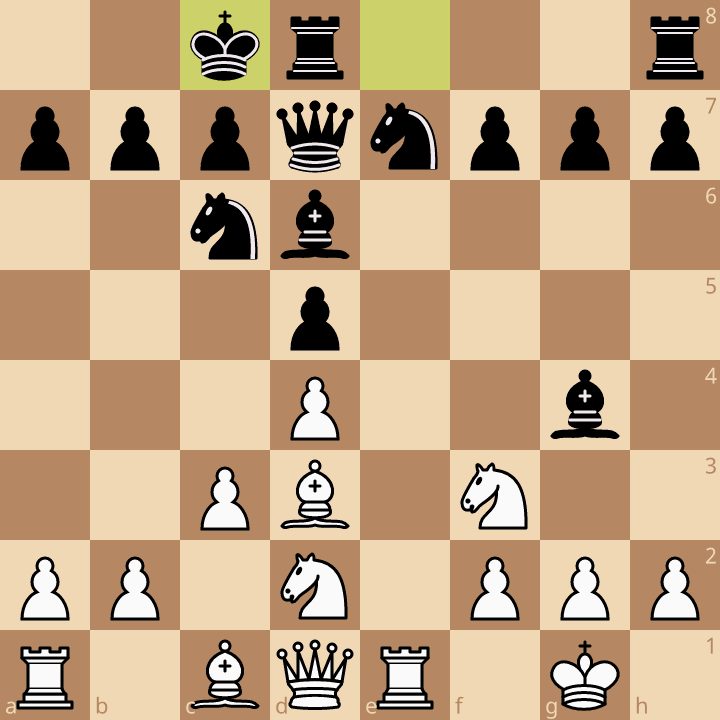
After 9…0-0-0 he could immediately apply what he learned. Starting with b4! he played a great attacking game and checkmated his opponent 15 moves later.
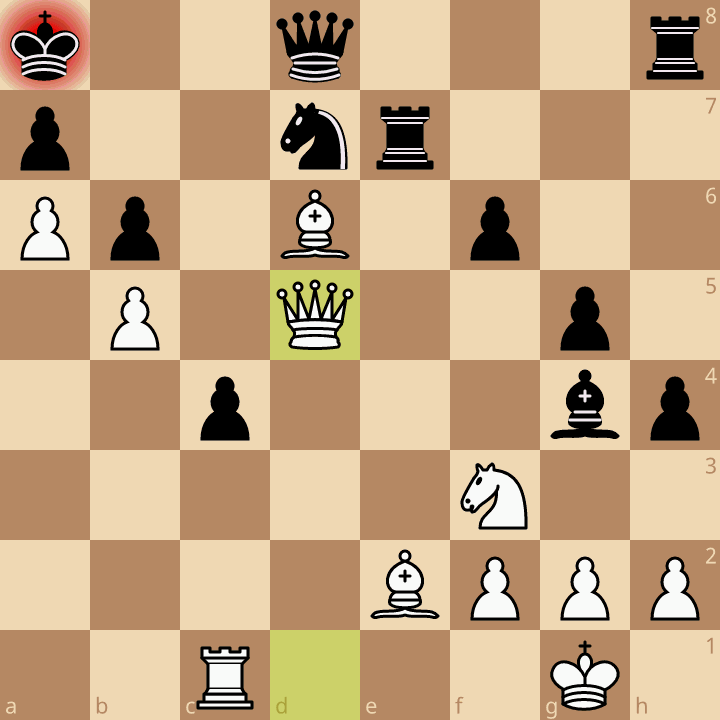
When I saw the game preparing for our next lesson I was so happy. Not only because this was an excellent game. But also because it is so rare that a student can immediately correctly apply something we’ve discussed in a lesson.
Here is what this usually looks like.
The Usual Story
Chess improvement is so difficult because you might learn something new and wait dozens of games to apply it.
You can learn a new opening against 1.e4 and all your opponents magically go for 1.d4.
You work on your rook endgames, only to never get in an endgame again.
In psychology, this is called delayed gratification, a delay between input (training) and output (improvement).
The obvious risk is that you give up. The less obvious risk, and the one that wrecks more chess careers, is misattribution.
The Most Common Misattribution
What happens very often is this.
You do what matters for a while. But because the effect is delayed, you don’t see results. You get frustrated and change plan. The marketing of some opening course or other quick fix gets to you.
A few weeks later, your rating goes up. Suddenly you win more games. The story checks out:
You got promised quick improvements and somehow it worked.
Convinced you found the hack to chess improvement, you keep buying opening courses. But nothing works anymore. You stagnate for a long time and get increasingly frustrated.
Your improvement was actually caused by the work you did before buying the opening course. You misattributed the cause, learned a painfully wrong lesson, and proceeded to waste a lot of time and money on things that don’t work.
Ask The Right Question
The next time you see your rating jump after trying something new, ask one question before you celebrate:
What was I doing six weeks ago?
That’s where your improvement likely came from. The thing you just bought probably had nothing to do with it.
Delayed gratification doesn’t just test your patience. It tests your honesty about what’s actually working.
Keep improving,
GM Noël
PS: This article was initially sent out to my Newsletter list. If you want to get chess improvement advice for free in your inbox, join 17,000+ chess improvers by signing up for Friday Grandmaster Insights here.
Whenever you’re ready, here is how I can help you:
- Want to know How to train chess well? Check out The Simplified Chess Improvement System. This course taught 800+ students the How of Chess Training. Create your high-quality chess plan and learn how to study each part of Chess, from tactics to openings & endgames. Click here to learn more.
- Rated below 1200 Chess.com? Need to refresh your fundamentals? Check out my course, Beginner Chess Mastery. You’ll learn all the fundamentals, from strategy to how to get the most out of your pieces, tactics, and endgames. You even get a full opening repertoire for free. Click here to learn more.